Learn why CV optimisation works differently on a VMS platform and what it takes to stand out. Covering keyword matching, CV structure, rate strategy and the common submission mistakes that cost suppliers shortlist spots.
Published on:
June 26, 2026
Author:
Mattias Van Nimmen & Nima Chitgar
Why CVs Work Differently on a VMS
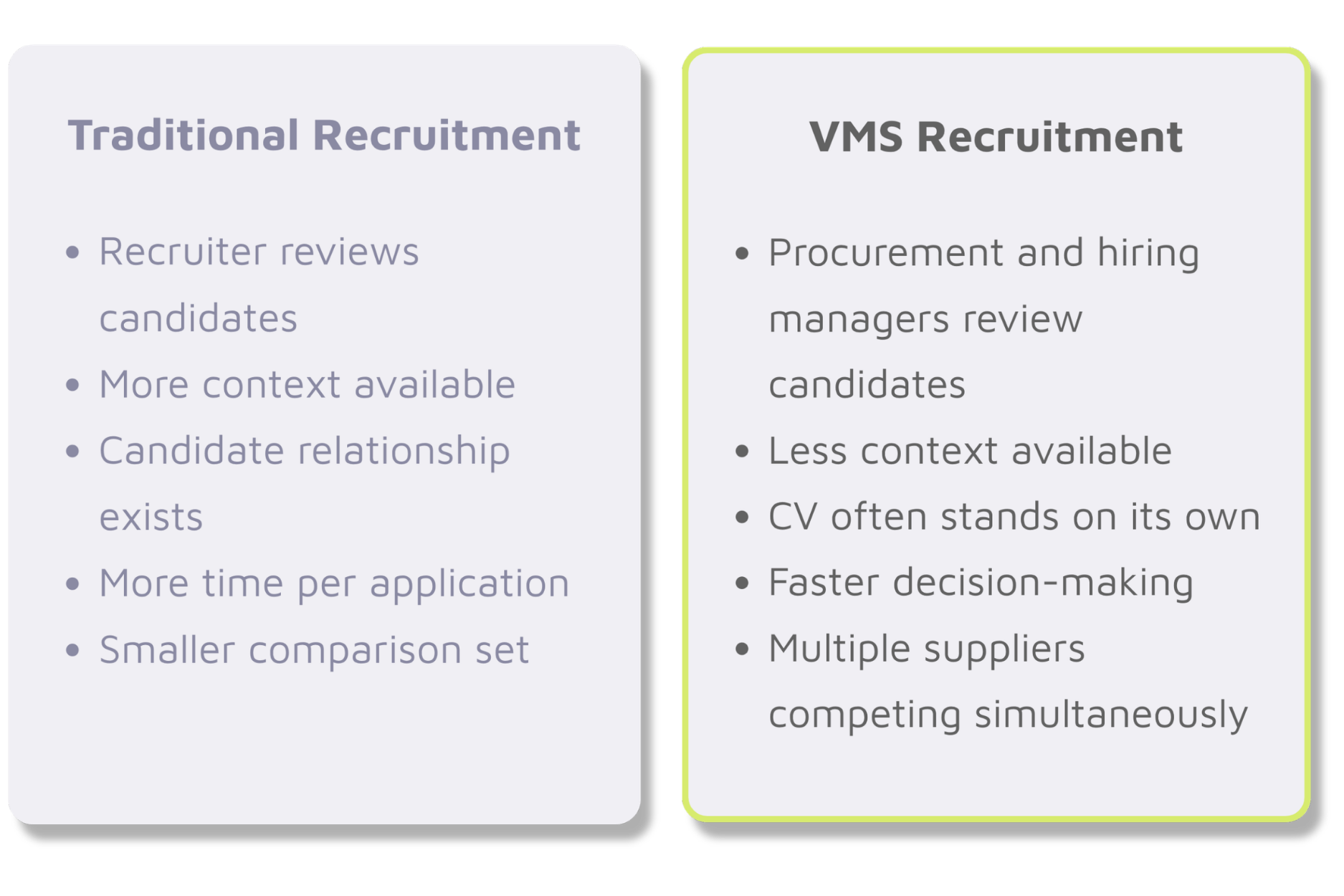
In traditional recruitment, context exists around a candidate. There may be a referral, a phone call, a personal introduction. A recruiter has time to discuss a candidate's background and fill in gaps.
On a VMS platform like Connecting-Expertise, none of that context exists. The CV is the first and often the only thing a hiring manager or MSP sees. There is no conversation to soften a mismatch. And with some requests on Connecting-Expertise attracting more than 50 or even 100 submissions, standing out from the pile is not optional.
It is also important to understand what Connecting-Expertise is and is not: as a VMS platform, Connecting-Expertise provides the link between companies and suppliers. It does not make shortlists or longlists. That is done by the hiring managers and MSPs reviewing the submitted CVs.
The keyword problem
Because VMS submissions go through automated matching before a human ever reads them, exact keyword phrasing matters more than most people realise. One of Nima's customers experienced this firsthand: they submitted a .NET developer, but the job description used ".NET" with the dot symbol, while the CV spelled it out as "dotnet." That single formatting difference caused the CV to be rejected automatically. The candidate was a perfect fit, but the CV did not pass the first check.
This illustrates something important: you cannot assume that a recruiter will interpret meaning. Automated systems do direct matching, and small discrepancies in how a skill is written can be the difference between a shortlist and a rejection.
Three Tips from Solvus, Belgium's Largest MSP
Solvus, the largest MSP in Belgium and Connecting-Expertise's biggest partner, shared three key recommendations for suppliers:
1. CV quality above everything else.Your candidate's experience should be clearly described, with start and end dates for each project. Skills must be explicitly listed, not implied. Leave no room for assumptions. Hiring managers assess candidates objectively based on what is written in the CV, not what could be inferred from it.
2. Mind the tariff.Rate can be a decisive factor in whether a candidate makes the shortlist. Some programmes on Connecting-Expertise operate with maximum unit prices. Always check the "Price Agreement" tab in the platform before submitting to make sure your rate stays within the ceiling. Below the maximum, the market determines outcomes, so submit a competitive, market-rate tariff.
3. Always click "Publish offer."When you create an offer in Connecting-Expertise, it starts as a draft. It will not be included in the selection process until you explicitly click "Publish offer." This sounds simple, but it is a common reason why submissions are missed entirely.
Four Practical CV Improvements You Can Make Today
Beyond the platform-specific tips, Nima walked through four concrete ways to strengthen any CV submission.
1. Add a one-pager front sheet
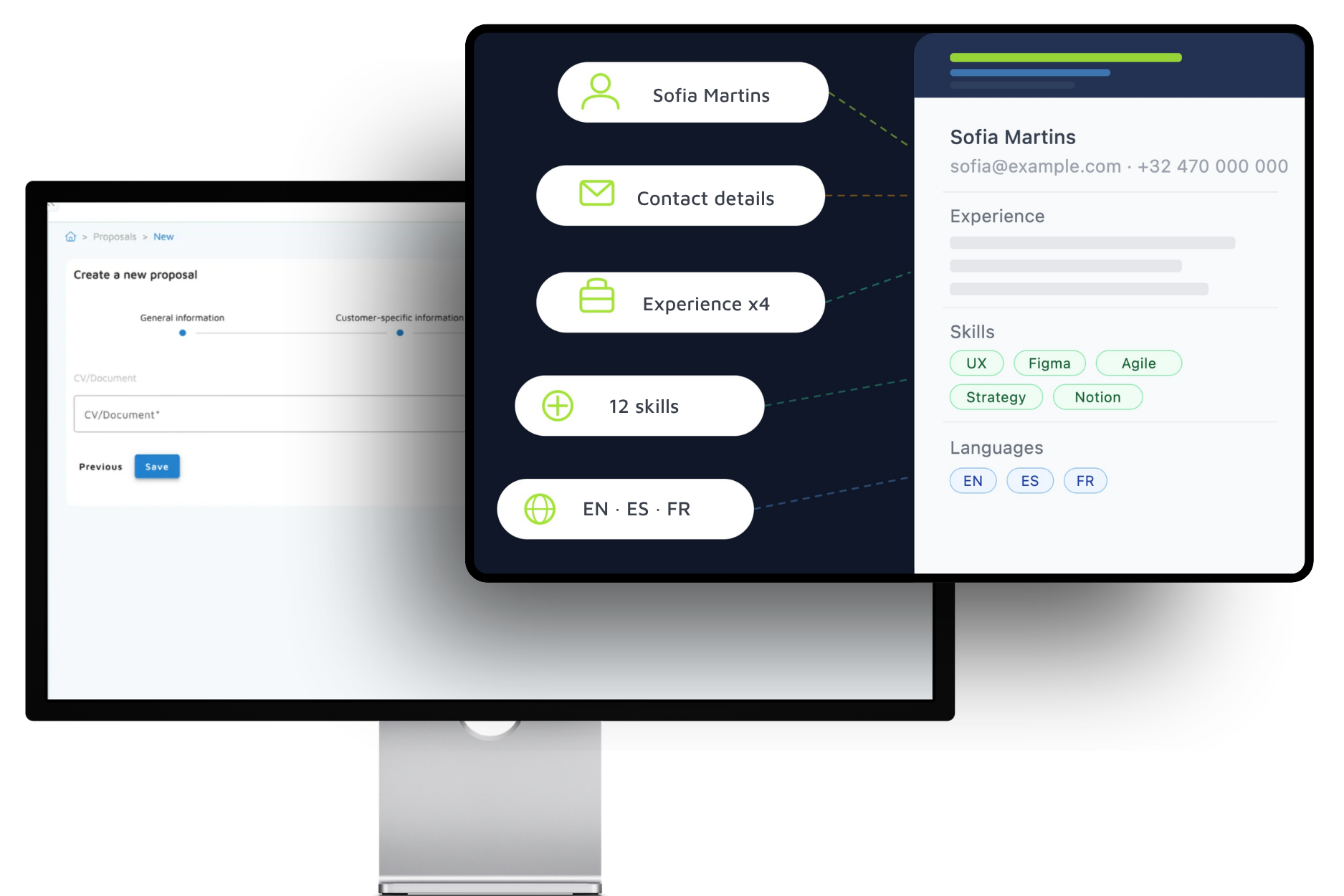
A growing trend among top-performing suppliers is attaching a one-page document before the CV itself. This front sheet explains, in a quick glance, exactly why this candidate is a fit for this specific role. It highlights the top three relevant experiences, the key matching keywords, and a short summary tailored to the job description. It is usually formatted with the staffing company's own branding and logo.
For a hiring manager reviewing dozens of submissions, that first page immediately answers the question "why should I read further?" If you do not have a formal one-pager process in place, the same principle applies to the introduction or summary section of the CV itself: tailor it specifically to each submission rather than leaving a generic candidate description.
2. Remove or deprioritise irrelevant information
A CV with too much noise actually works against a candidate, both for human reviewers and automated matching systems. If the role requires Python, AI frameworks, and advanced technical skills, listing Microsoft Word and PowerPoint under skills dilutes the signal. It is not that those skills are wrong to include. It is that they should not appear prominently. Move less relevant information to the bottom of the CV, well below the experience and skills that actually matter for this request.
The same logic applies to personal interests and hobbies. If there is no relevant reason to include them near the top, they should not be there.
3. Mirror the language of the job description
Always read the job description carefully and check how specific skills and tools are written. Then make sure the CV uses exactly the same phrasing. If the tender says ".NET," the CV must say ".NET." If it says "Agile methodology," do not write "agile project management."
This matters at two levels. First, automated systems do literal keyword matching, so a synonym or variant may simply not register. Second, even a human reviewer scanning for a particular term will notice faster if the exact word they are looking for is on the page. The goal is to make it easy, not to make the reader work for it.
4. Tailor the summary for every submission
The introduction or summary at the top of a CV is the first thing most people read. It should not be a static description of the candidate. It should be rewritten, or at least refined, for each submission, answering the question "why is this person a fit for this particular request?" based on what the job description actually asks for.
Alongside this, do your pre-sales groundwork. Try to understand the company and the culture before you submit. Knowing what types of professionals already work there, what the company values, and what is happening in that team gives you a head start in presenting a candidate in the right light.
Speed Matters Too
Quality is important, but speed is increasingly a factor in today's market. Clients on Connectin- Expertise do not always wait until the official closing date to start reviewing and shortlisting. When they find the fits they need, they move forward. Submitting promptly, while still checking all the boxes, gives your candidates a real advantage.
Criteria
Connecting-Expertise
SAP Fieldglass
Nétive VMS
ProUnity
Primary market
Belgium / EU
Global
Benelux / Europe
Belgium / Benelux
Founded
2007
1999
2003
2015
Platform type
VMS + Marketplace
VMS + Marketplace (2023)
VMS + ATS + FMS
VMS + Marketplace + MSP
Marketplace
Integrated supplier and freelancer marketplace, native to platform
General-purpose AI tools like ChatGPT or Claude can be used to help summarise or tailor CVs. You can paste in a job description and ask the tool to adjust the CV accordingly. For suppliers who submit CVs a few times a month, this approach works reasonably well.
However, there are real limitations. Generic AI models need to be manually verified, as they do not know the specific context of a VMS workflow. For longer CVs (more than three or four pages), they can lose or drop information during generation. Processing a document can also take 10 to 15 minutes, and the output still requires a careful human review to ensure accuracy.
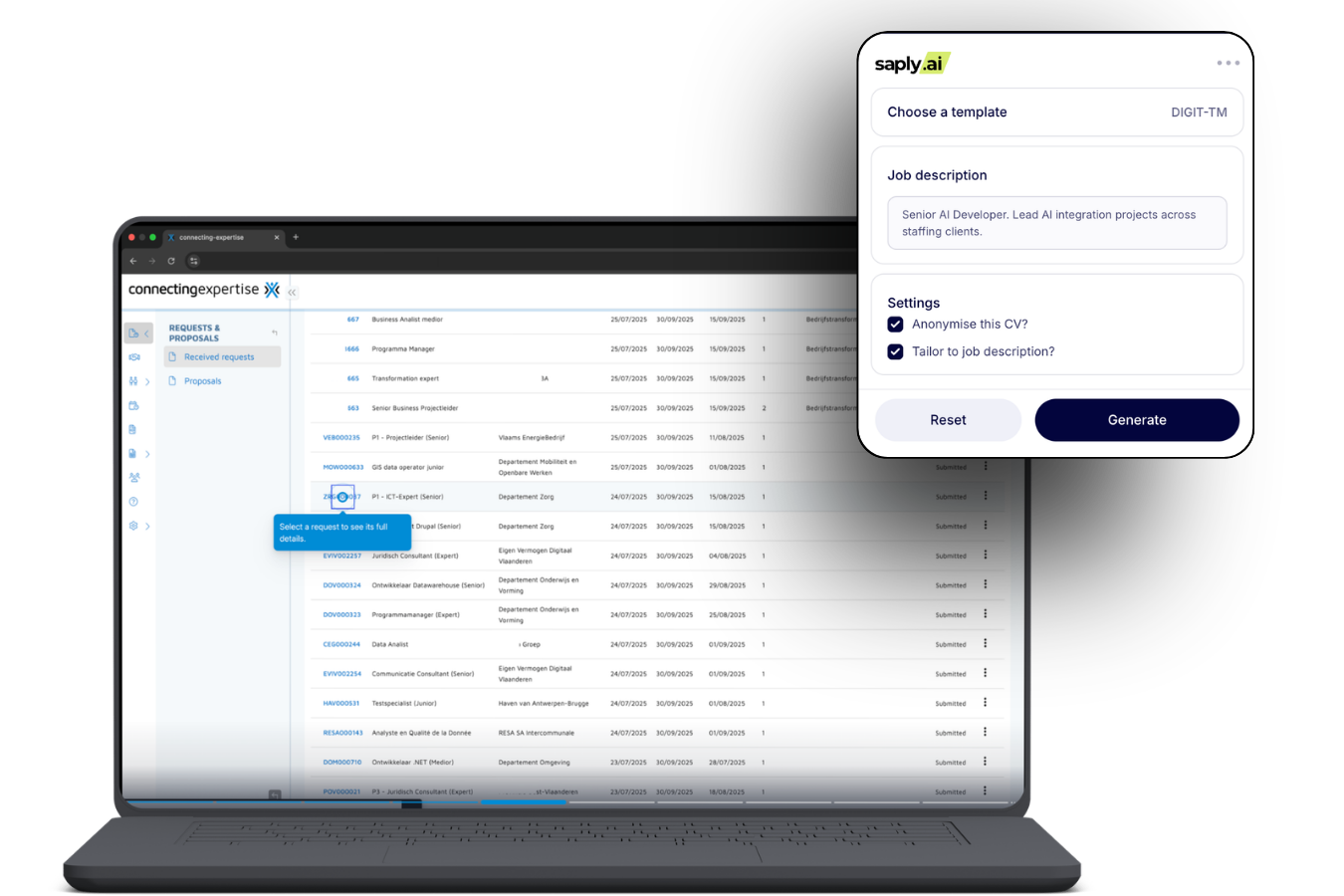
For suppliers processing five to ten CVs a day, that overhead adds up. Specialised tools built specifically for CV processing in a staffing context, like Saply.ai, address these limitations by integrating directly into Microsoft Word or Google Docs, preserving candidate templates and branding, performing keyword gap analysis against job descriptions, and flagging exactly what information was changed, dropped, or is missing before you submit.
FAQ
What is the single most important thing to fix on a CV before submitting to a VMS?
Make sure the keywords in the CV match the exact phrasing used in the job description. Even small differences, such as an abbreviation versus a full word, can cause an automated system to miss the match entirely.
Should I use a client-specific CV template or our own company template?
It depends. Some clients and programmes mandate a specific template, so always check first. If there is no requirement, start with a one-pager tailored to the role, followed by either your own branded template or the original CV. That combination covers the most ground and typically gets you 90% of the way there.
Where is the line between optimising a CV and overselling a candidate?
Optimisation means highlighting what is already true and relevant: tailoring the summary to the job description, reordering priorities, matching keyword phrasing. Overselling means adding skills or experiences the candidate does not actually have. The latter will surface in the interview and reflects badly on both the candidate and the staffing firm. Credibility is a long-term asset, and a quick win through misrepresentation will always backfire.
Does submitting early on Connecting-Expertise actually make a difference?
Yes. Clients do not always wait for the closing date before shortlisting. Submitting a strong, well-tailored CV early in the window means it gets seen sooner. If the hiring team finds their fits, they will move forward without waiting for the deadline.
How do I make sure my submitted offer is actually visible to hiring managers?
After creating your offer in Connecting-Expertise, it remains in draft status until you click "Publish offer." If you skip this step, your submission will not appear in the selection process. Always verify the offer is published before considering your submission complete.
This blog is based on the Connecting-Expertise webinar on CV optimisation for VMS platforms, featuring Nima, founder of Saply.ai, and insights from Solvus.
By clicking “Accept”, you agree to the storing of cookies on your device to enhance site navigation, analyze site usage, and assist in our marketing efforts. View our Privacy Policy for more information.

.png)