How to Be a Successful Supplier on a VMS Platform: 5 Proven Strategies

80% of winning proposals on a VMS platform are submitted within 48 hours. Here are the 5 strategies that consistently separate successful suppliers from the rest.

Published on:

April 23, 2026

Author:

Jan Bleyaert & Mattias Van Nimmen

Introduction

If you're a staffing supplier or consultancy active on a Vendor Management System (VMS) platform, you already know the competition is real. Dozens of suppliers can see the same request. The client has limited time to evaluate proposals. And feedback is often minimal.

So what separates the suppliers who consistently win from those who respond to everything and hear nothing back?

At Connecting-Expertise, we've tracked what drives success for the suppliers on our platform. The patterns are clear. And they're not what most people assume.

What Is a VMS Platform and Why Does It Change How You Should Operate?

A Vendor Management System is a software platform that helps companies manage their external workforce: freelancers, interim workers, consultants, and the suppliers who provide them. Instead of managing dozens of supplier relationships by email or spreadsheet, companies use a VMS to centralise sourcing, contracting, timesheets, and payment in one place.

For suppliers, this changes the game. You're no longer competing purely on relationship. You're competing on responsiveness, quality of proposals, and platform presence. The clients evaluating you often don't know you. They see your proposal, your profile, and your price. That's it.

Understanding this is the starting point for everything else.

The Platform Structure: A Quick
Reference

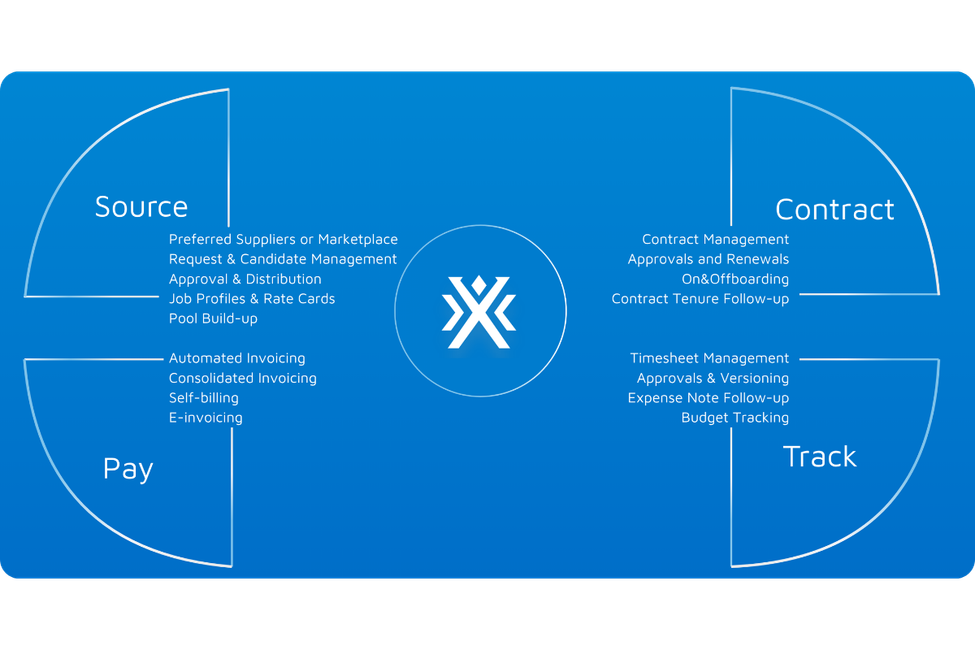
For those newer to Connecting-Expertise, here's how the four main modules connect.

Source is where clients publish requests, either to a preferred supplier list or to the open marketplace. Suppliers respond with proposals.

Contracts handles the contracting process once a proposal is selected. Suppliers can participate in approval flows directly from the platform.

Track is the timesheet module. For clients using it, contractors log hours here, and suppliers can view and manage timesheets from their side.

Pay manages financial documents. Some clients use self-billing, where CE generates invoices on your behalf. Others require you to submit your own invoice outside the platform.

1. Speed Is a Competitive Advantage, But Not the Way You Think

Data from the Connecting-Expertise platform shows that 80% of selected proposals are submitted within 48 hours of a request being published. That's not a coincidence. Clients have a deadline to fill. Early submissions get more attention. Latecomers are often already irrelevant.

But speed without quality is counterproductive. What the best suppliers actually have is readiness. They can move fast because they've done the preparation in advance. Their talent pool is well-documented. They know who's available, what skills they have, and where they're willing to work. Their internal systems are organised, so there's no manual searching through spreadsheets when a new request comes in. And they've set up the platform correctly so notifications reach the right people immediately.

If you're currently losing 24 hours just to figure out who to propose, that's a process problem, not a talent problem. Fix the process, and speed follows naturally.

Practical tip: Use the Human Resources feature in Connecting-Expertise to build a structured candidate list directly in the platform. Once a profile is created, you can reuse it across multiple proposals without re-entering data. It also prepares you for upcoming AI matching features, more on that below.

2. Be Selective: Fewer, Better Proposals Win

One of the most common mistakes suppliers make is submitting as many candidates as possible, hoping something sticks. It doesn't work. It actually signals to clients that you haven't thought carefully about their request.

The suppliers who win most frequently submit two or three highly relevant candidates, with a clear rationale for each. They've read the brief carefully. They understand what the client is actually looking for. And they've matched their best fits accordingly.

This requires knowing your talent well. Not just their CVs, but their ambitions, their strengths, and the types of environments they thrive in. The suppliers with strong internal talent management consistently outperform those who treat their database as a searchable spreadsheet.

If your current tools make this hard, the Connecting-Expertise API allows you to connect your existing ATS or internal systems directly to the platform, eliminating the manual step of re-entering candidate data for every proposal. If you're spending significant time on data re-entry, this is worth exploring.
3. Price Competitively, Not Cheaply

A competitive rate does not mean the lowest rate. It means a rate that is credible, market-aligned, and justifiable.

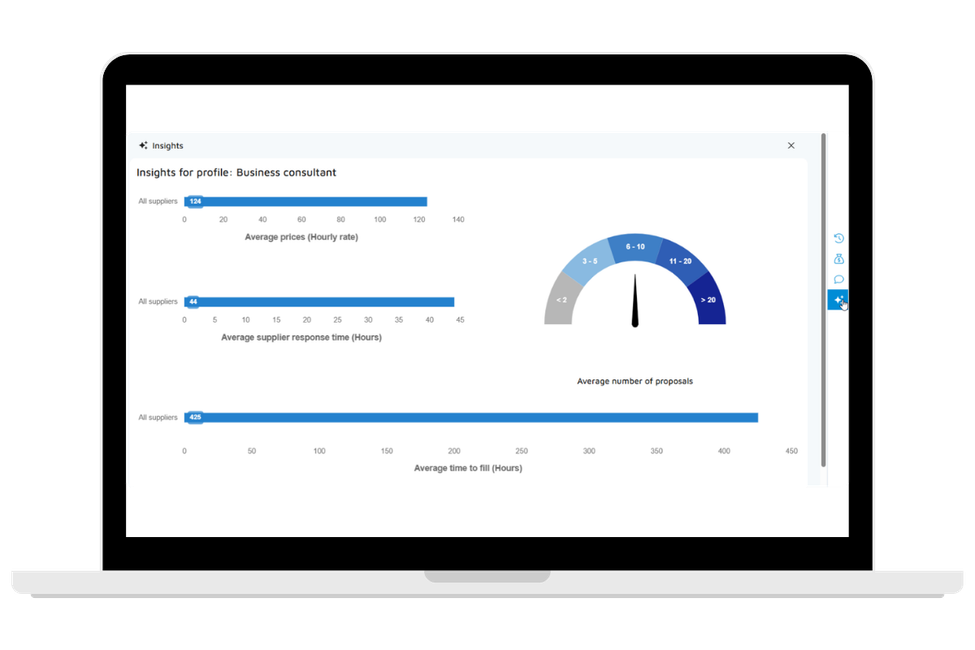
The Connecting-Expertise Insights feature helps you calibrate this. For each request, it shows average proposed rates from similar past requests, the average number of proposals typically received, average supply response time for comparable roles, and average time to fill for that type of request.

These data points are generated by mapping each request to a standardised ESCO job profile (a European Commission framework for occupational profiles), determining seniority, and aggregating statistics from comparable historical requests.

This means you don't have to guess. You can check whether your rate is in a reasonable range before submitting and adjust your approach accordingly. Consistently pricing outside the market range, whether too high or too low, hurts your win rate and your reputation with clients over time.

4. Tailor Every Proposal to the Specific Request

Generic proposals lose. It's that simple.

A strong proposal doesn't just present a CV. It shows that you've understood the context: the client's industry, the likely team structure, the skills that genuinely matter for this role, and any gaps in the candidate's profile that might be worth addressing upfront.

A few practical things that make a real difference: reorder the CV to bring the most relevant skills and experience to the top; address skill gaps honestly (if your candidate is missing something on the job description, acknowledge it and explain why they're still a strong fit); and include at least one sentence showing you understand what the client does or what the role is really for. That last one sounds small. It stands out more than you'd expect against proposals that read like copy-paste.

Tools like Saply.ai, a Belgian company specialising in tailored CV generation, can help you produce customised profiles quickly based on a specific brief. They also integrate with the Connecting-Expertise platform, so it's worth evaluating if proposal customisation is a recurring time bottleneck for your team.

5. Know the Company and the Ecosystem Around It

This is the least technical point on the list, and possibly the most important.

The best proposals don't just match on skills. They show that the supplier understands the client's business, their culture, and the procurement structure around the role. Is there an MSP involved? Who is it? What's their typical process? Is this a net-new supplier relationship or is the client already familiar with your firm?

Clients are people. The suppliers who invest a little time understanding who they're proposing to consistently outperform those who don't. This is still a relationship business, mediated by a platform.

A note on Preferred Supplier Lists (PSLs): Many clients on Connecting-Expertise maintain a PSL, a curated list of trusted suppliers who receive requests before or instead of the open marketplace. Getting onto a PSL is not something you can apply for directly. It's something you earn through consistent performance on marketplace requests. Win deals, deliver well, repeat. That's the path.

Managing Notifications and Specialisations

Two platform settings that have a disproportionate impact on your results:

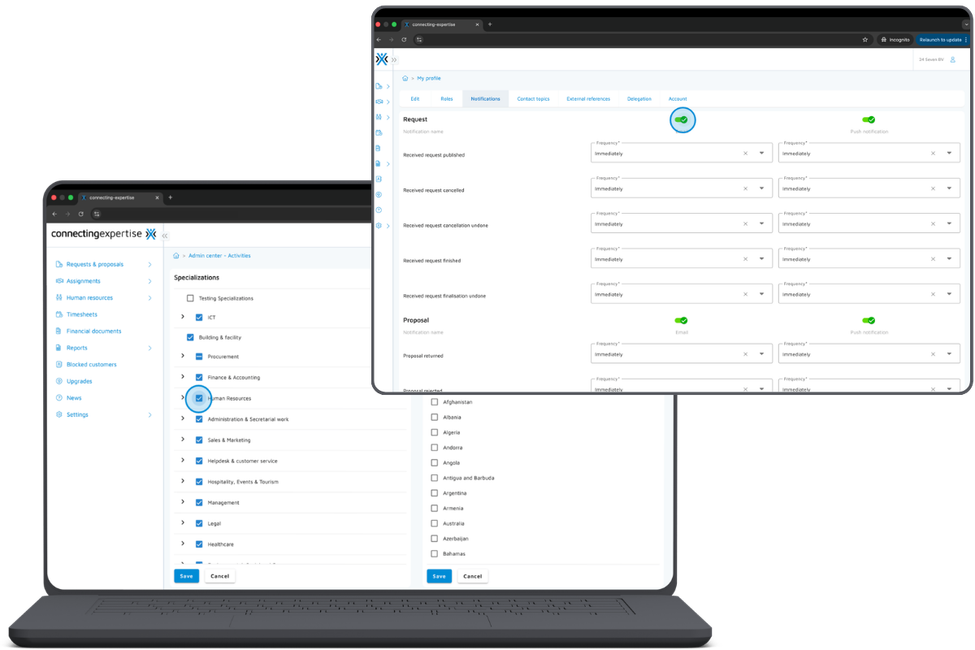
Specialisations: You only receive marketplace requests that match the specialisations you've enabled in your settings. If you're not seeing relevant requests, or you're being flooded with irrelevant ones, this is almost always the reason. Go to your settings (admin access required) and review your selections carefully. Too narrow and you miss opportunities; too broad and you get overloaded.

Notifications: You can configure each notification type to arrive immediately or as a daily digest. For time-sensitive requests, immediate delivery is better. For lower-priority updates, a daily digest avoids inbox fatigue. Find your settings under your name in the top right corner, then Notifications and Preferences.

Summary: The Five Factors That Drive Supplier Success

The suppliers who consistently win on VMS platforms like Connecting-Expertise share five characteristics. They're fast, because they're prepared, not because they rush. They're selective, submitting fewer but better proposals rather than playing a volume game. They price credibly, using market data rather than gut feel. They tailor every proposal to show genuine understanding of the request. And they know the client: the business, the culture, the ecosystem.

None of these require access to more talent. They require a different approach to the talent you already have.

Ready to Improve Your Performance on the Platform?

If you're a supplier on Connecting-Expertise and want to explore how Insights, the API, or other platform features could help your team work more efficiently, book a call with our team. We're happy to walk you through what's available and what makes sense for your setup.

Not yet on the platform? Register as a supplier and get access to one of Belgium's largest active workforce marketplaces.

Criteria Connecting-Expertise SAP Fieldglass Nétive VMS ProUnity
Primary market Belgium / EU Global Benelux / Europe Belgium / Benelux
Founded 2007 1999 2003 2015
Platform type VMS + Marketplace VMS + Marketplace (2023) VMS + ATS + FMS VMS + Marketplace + MSP
Marketplace Integrated supplier and freelancer marketplace, native to platform External Talent Marketplace launched 2023, US-first No native open marketplace Open marketplace with 17,000+ freelancers
Trilingual EN/NL/FR Fully trilingual platform 21 languages globally, not BE-specific Multilingual, Benelux focus French and Dutch content, not fully trilingual platform
Local Belgian compliance Strong, built for Belgian market from day one Via integrations and localisation layers Strong, Benelux compliance focus Strong, Belgian public sector specialist
Configurability High, 8,000+ configuration options High, enterprise-grade, longer implementation cycles High, configurable for mid-market and MSPs Moderate, modular and scalable
Speed to deploy Fast, direct support, short implementation Slower, enterprise cycles, SAP ecosystem dependency Fast for mid-market Fast, marketplace-first model
Freelancer access Yes, direct via marketplace Via External Talent Marketplace Yes, via integrated FMS Yes, core to the platform
MSP support Yes Yes Yes Yes, dedicated MSP team
ISO 27001 Not publicly confirmed Yes Not publicly confirmed Yes, certified March 2025
SAP ecosystem integration External integration possible Native, part of SAP suite Independent Independent
Best fit EU-centric organisations wanting speed, local precision, and an integrated marketplace Large global enterprises standardising on SAP Benelux mid-market and enterprise, MSP programmes Belgian organisations wanting marketplace + MSP + VMS in one

What's Coming: AI-Powered Matching

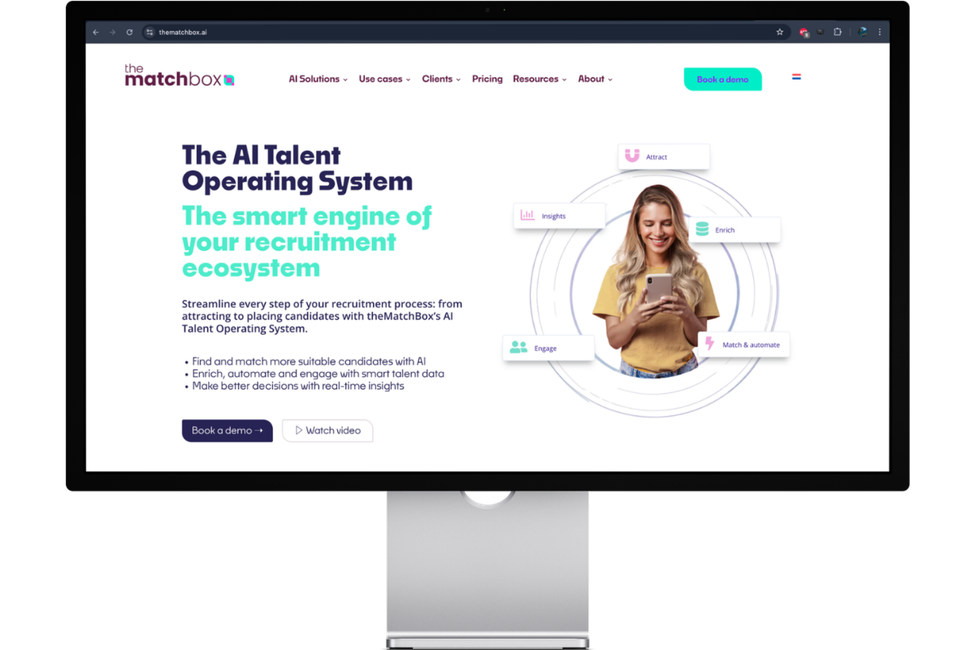
Connecting-Expertise recently integrated with Matchbox, an AI company specialising in HR matching and now part of the CE organisation. The roadmap includes an in-platform matching tool that will rank your Human Resources profiles against incoming client requests, giving you an automatic shortlist of your best-fit candidates for each new opportunity.

This makes the Human Resources feature worth setting up now. The candidates and CVs you structure today will feed directly into the matching algorithm when it goes live.

Questions From the Community: Webinar FAQ

The following questions were submitted by suppliers and freelancers during a live Connecting-Expertise webinar. We've compiled the most relevant platform and process questions here.

Requests & Matching

  1. What's the difference between "should have" and "must have" criteria on a request?
    Both can have an impact on your matching score.
  2. If a request shows "(freelance)" in brackets, does that mean suppliers can't submit candidates?
    This depends on the client. Best to check directly with them.
  3. Is it worth submitting a candidate 48 hours after a request was published?
    Definitely still worth it. Some clients only decide after the latest reaction date has been reached. But speed is important.

PSL vs. Marketplace

  1. Do all clients work with a PSL?
    No, some clients only use the marketplace.
  2. How do you get onto a client's PSL?
    This is by invitation from the client. Some clients also use the marketplace to discover new suppliers and then add them to their PSL.
  3. Does moving from marketplace to PSL status happen automatically after working with a client?
    No, this is optional, it's at the client's discretion.

Platform Features & UX

  1. Where do I set my specialisations?
    You can find a step-by-step guide here: https://help.connecting-expertise.com/hc/en-us/articles/20048007760924
  2. If I add a specialisation later, will I only see new requests from that point forward?
    No, in the current version of the platform, existing open requests are also added, even if they were published before you selected the specialisation.
  3. How do I manage my notification settings?
    You can manage your notifications by clicking on your profile at the top right of the screen and then selecting ‘notifications’.
  4. Is the Insights feature included or is it a paid upgrade?
    Insights is a paid upgrade. Pricing depends on company size and number of users. You can find more info and how to upgrade here: https://help.connecting-expertise.com/hc/en-us/sections/21672188928156-Insights

Have more questions about the platform? Visit our Help Centre, we update it regularly with step-by-step guides, how-tos, and answers to the most common questions from our supplier and freelancer community.

Get started for free ↗︎

Discover Success Stories

Bpost's Journey to Supplier Optimization with Connecting-Expertise VMS
ORES's Advancement in Modernizing Procurement with a Comprehensive VMS Solution
By clicking “Accept”, you agree to the storing of cookies on your device to enhance site navigation, analyze site usage, and assist in our marketing efforts. View our Privacy Policy for more information.